
Second Quarter 2026: Canal History and the AI Boom
Submitted by Alsworth Capital Management, LLC on July 24th, 2026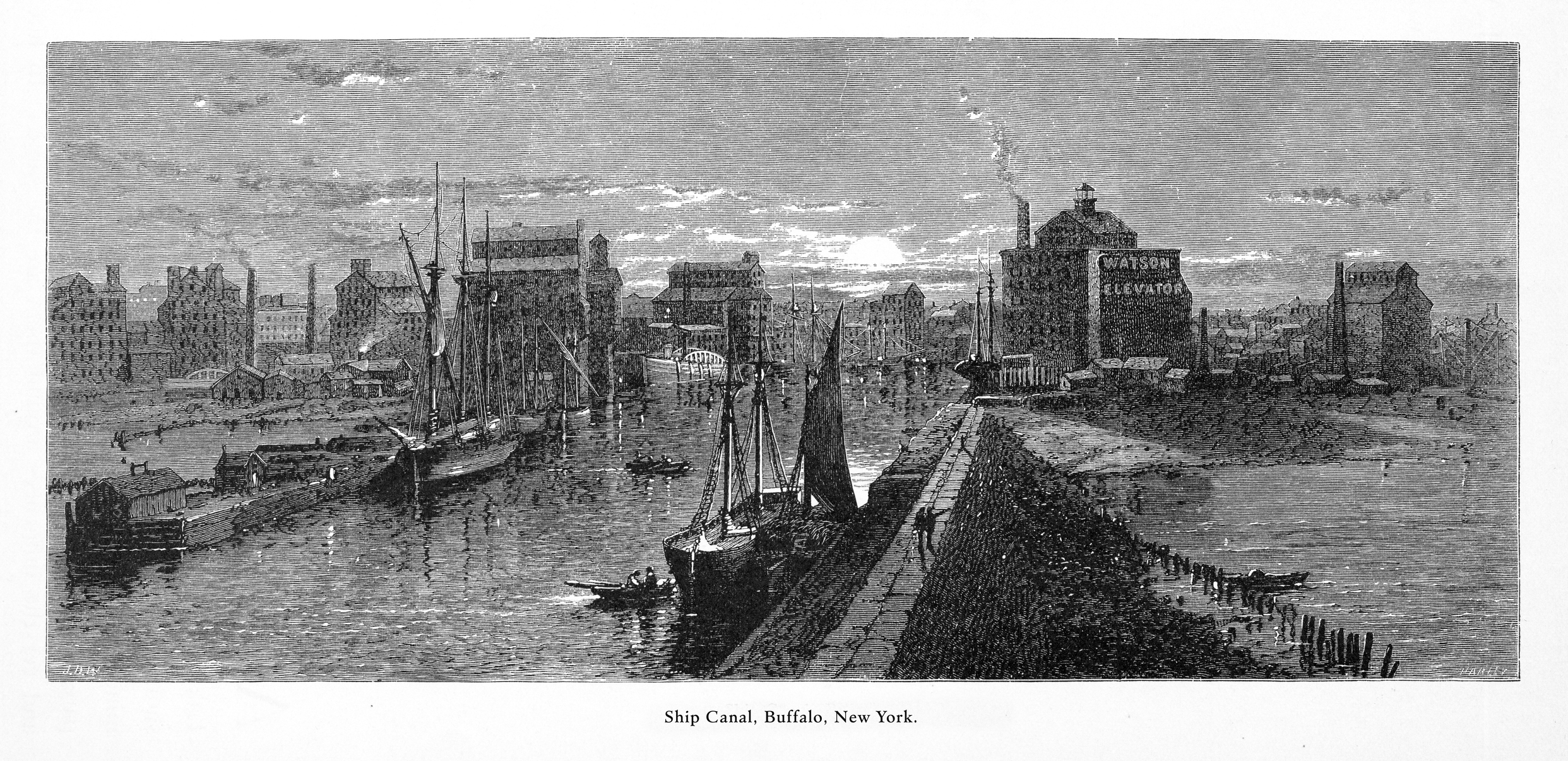
I’m writing this commentary while traveling by boat from Seneca Lake through sections of the Erie Canal toward Lake Ontario. Our hopes of crossing Lake Ontario and exploring the Rideau River in Canada were dashed by a mechanical shaft failure that requires hauling the boat out of the water for professional repair, ending our vacation and likely our boating season. Fortunately, we discovered the issue just before entering Lake Ontario and we are now heading toward a qualified repair shop along the canal. The positive side of this experience has been enjoying the locks and small towns along the canal. There is so much history along this route, as each town highlights the engineering feat of the canal system, as well as its historical economic impact. The old brick buildings, ornate architecture and palatial estates are fantastic reminders of a bygone era. Museums and plaques highlighting the many historically important figures that once lived in canal towns set the tone for how important this technological boom was to the growth of our country.
Completed in 1825, the Erie Canal connected New York City and the Hudson River to the Great Lakes, reducing transportation costs for goods and raw materials by as much as 95%. This transformed towns along the route as mills, factories, banks, and retail businesses expanded around the canal. Rural workers migrated toward city centers, supporting population growth, and economic prosperity. One of the most lasting impacts was the development of strong banking institutions and the expansion in the use of credit. Many local banks were created and they appear prominently along the canal. They financed manufacturing plants, homes, and consumer spending, making the canal not just an engineering feat but a catalyst for financial and commercial development.
The Erie Canal’s success sparked “canal mania,” a wave of overbuilding, heavy borrowing, and fierce competition across the country in the 1830s. Many competing canal systems were built in close proximity to one another, often connecting less significant trading centers. States issued bonds to finance projects whose toll revenues later failed to meet lofty expectations. The Panic of 1837 exposed this excess, leading several states to default and triggering severe economic downturns. Railroads soon emerged with cheaper, year-round transportation unconstrained by water routes, leaving many canal investors with large losses and many incomplete canals abandoned. The Erie Canal still operates today, but on our recent trip we saw only a handful of boats each day. It now serves mainly as a tourism route, with little commercial barge traffic.
Similar over investment followed railroad technology and later the internet revolution. Corning Incorporated, the largest employer in my town, built enough fiber to wrap the earth 125,000 times. Much of this fiber remained “dark” for nearly thirty years before bandwidth demand finally caught up to the infrastructure that was built. Today’s AI boom shows many of the same traits. Hyperscalers have committed to roughly $850 billion in spending over the next 12 months, with estimates that the figure could approach $1 trillion (with a “t”). The profits that these hyperscalers earn from their other businesses have all been committed to the AI build-out and their collective free cash flow has now turned negative. They are forced to borrow historic amounts of money by issuing bonds to investors to fund the continued investment in infrastructure. They are also facing intense competition from lower cost providers like those coming from China. Pricing is shifting toward a usage-based model, and many early adopter companies are reigning in how much they are spending on AI, as a result. I use AI tools daily and find the technology astounding. However, I fear we are in a classic over investment cycle in which AI becomes widely available at declining costs, limiting profitability. As a result, we have underweighted high-priced technology stocks and continue to focus on downstream companies benefiting from AI infrastructure investment. Though, it remains difficult to find opportunities in an expensive stock market that has lifted valuations for nearly every corner of the market.
Market Review and Outlook
The S&P 500 Index rose 15% in the second quarter and is now up 10% year-to-date, driven by the Iran War cease-fire announcement and renewed “risk-on” sentiment. U.S. strength was led by a 31% rise in information technology, further stretching already high valuations. Oil prices fell from over $100 per barrel to around $70 after the cease-fire memorandum, but the conflict remains unsettled and renewed volatility has followed the collapse of recent agreements. Inflation remains elevated, pushing long-term rates higher and keeping bond returns muted. Bond markets gained less than 1% for the quarter and about 0.6% for the year. We continue to underweight bonds in favor of commodities. International markets rose nearly 11% for the quarter and 9% year-to-date, while emerging markets gained 24%. Our underweight to U.S. technology stocks hurt relative performance, but our full emerging-markets allocation helped. Gold declined 14% for the quarter and 7% for the year, largely due to a stronger U.S. dollar, but we continue to view gold as a useful hedge against uncontrolled deficit spending and high U.S. asset valuations. We remain underweight stocks overall on valuation concerns. Technology sentiment is still strong, and the market shows few signs of immediate distress, with most news being absorbed through an optimistic lens. However, we also note that large new stock offerings, such as the recent SpaceX IPO and upcoming OpenAI IPO, can act as canaries in the coal mine during periods of mania. While it may be uncomfortable to cut against momentum, we believe in the long-term benefits of diversification and contrarian positioning at market extremes. Please reach out to discuss our recent positioning or any questions you may have.
Cordially,
Shane M. Alsworth, MBA, CFP®, CLU®, CIMA®
The views and opinions presented in this article are those of Shane Alsworth only
Sources: Morningstar/Ibbotson data, BCA Research, Advisor Intelligence
*US large stocks (S&P 500 Index), US large-cap growth (Russell 1000 Growth Index), US large-cap value (Russell 1000 Value Index), US small stocks (Russell 2000 Index), developed international stocks (MSCI EAFE Index), emerging market stocks (MSCI Emerging Markets Index), core investment-grade bonds (Bloomberg U.S. Aggregate Bond Index), floating rate loans (S&P/LSTA Performing Loan Index), US Dollar (DXY Index), gold (Aberdeen Physical Gold ETF), commodities (Bloomberg Commodity Index)
Disclosures:
Investments are subject to market risks including the potential loss of principal invested.
Asset Allocation does not assure or guarantee better performance and cannot eliminate the risk of investment losses.
All information has been obtained from sources believed to be reliable, but its accuracy is not guaranteed. There is no representation or warranty as to the current accuracy, reliability, or completeness of, nor liability for, decisions based on such information, and it should not be relied on as such.
The views expressed in this commentary are subject to change based on market and other conditions. These documents may contain certain statements that may be deemed forward‐looking statements. Please note that any such statements are not guarantees of any future performance and actual results or developments may differ materially from those projected. Any projections, market outlooks, or estimates are based upon certain assumptions and should not be construed as indicative of actual events that will occur.
Alsworth Capital Management Inc. ("Alsworth") is a registered investment advisor. Advisory services are only offered to clients or prospective clients where Alsworth and its representatives are properly licensed or exempt from licensure.
For additional information, please visit our website at https://www.alsworthcapital.com/
