
First Quarter 2026: It’s All About The Strait and Narrow
Submitted by Alsworth Capital Management, LLC on April 20th, 2026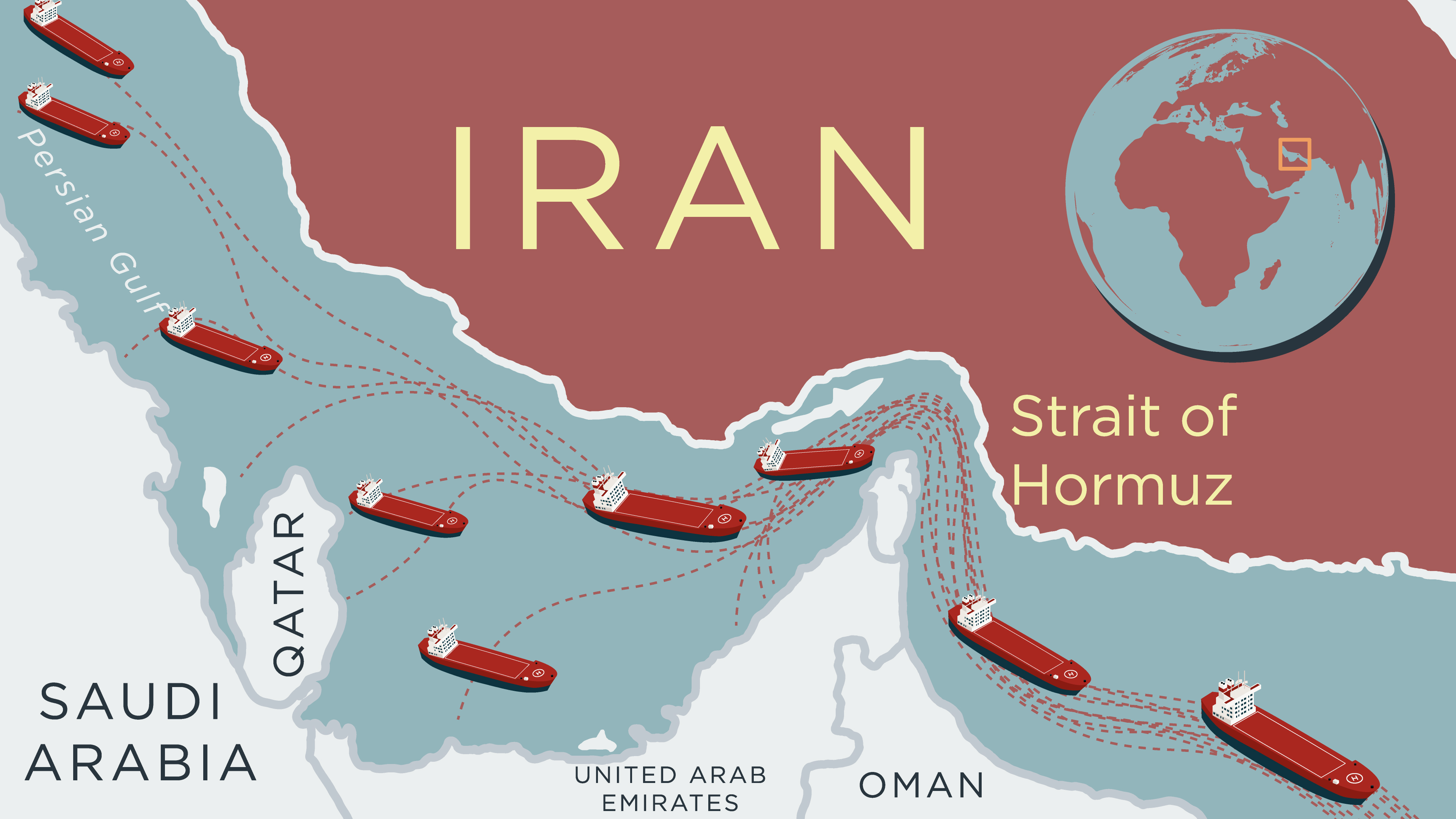
Market Recap
I love managing money. I love consuming the news and the diversity of topics that I need to stay abreast of to do my job. I generally like having a busy schedule and pushing the limits of my capacity. However, I do feel like I’m drinking from a firehose lately and I’m certain you must feel the same way! The markets are made up of humans and sometimes these human investors, when acting as a herd, properly forecast the economic impact of certain events, well in advance. Other times, they revert to caveman brain lowest common denominator behavioral bias, which causes mispricing that either overstates or understates true risk. I would characterize the market activity of this first quarter of 2026 as mirroring investors’ mental exhaustion, having been whipsawed so many times that they are frozen in place.
Over these first three months, the S&P 500 Index of large US stocks declined by just 4.3%. The average return masked some significant divergence in sector returns. The software technology sector of the index was down over 24%. This was driven by fears that AI would eliminate the need for software services, since AI agents can customize software code for anyone with access to a computer. As a result of the spike in oil prices, energy related stocks in the index were up over 38% as a group. The Russell 2000 index of small US companies rose less than 1% and the MSCI EAFE index of Developed International stocks was down just 1.2%. The MSCI Emerging Market Stock index was nearly unchanged, and the Bloomberg Aggregate Bond index was unchanged. Gold started off the year with a continuation of its monster 60% rally of 2025, rising over 25% in January before selling off at the beginning of the Iran War, and ending the quarter up 8.6%. Managed futures were up 7.1% and Commodities were up 24.4%.
Investment Outlook and Portfolio Positioning
The year started off with the capture and extradition of Venezuela’s president and his wife. We negotiated with a new transition government and now the US controls all revenue from Venezuelan oil sales, as well as all licensing for who is allowed to receive their exported oil. The Trump Administration then put Cuba on notice that they may be next. Within two months, the US joined Israel in bombing Iran, killing their Supreme Leader, at least four of his close family members, and at least nine of their highest-ranking government officials. What is left of Iran’s military leaders countered by bombing commercial ships traversing the Strait of Hormuz and installing explosive sea mines. By now, you know where this strait is located and the fact that 20% of the world’s oil production must traverse it. In addition to oil, 20% of the world’s liquified natural gas (LNG), 30% of the world’s fertilizer and 35% of the world’s helium passes through the strait. There are many ripple effects that are less obvious, as well. As a result of the obvious risks of relying on oil production for energy, much of the world, including data center builders in the US, are shifting their focus to nuclear energy. Uranium is necessary for nuclear energy. Sulfur is a required mining resource, which is injected into the ground to dissolve and extract Uranium. Approximately half of the world’s seaborne sulfur transits the Strait of Hormuz. Much attention is rightfully given to the price of oil and the inflationary impact of higher gasoline prices. However, the impact is far reaching, causing inflation in prices for agricultural goods (fertilizer, diesel), manufacturing input costs, transport costs, air travel (jet fuel), energy (oil, LNG, propane, nuclear) and the production of plastics. The markets have been fixated on the Strait of Hormuz, with social media posts from President Trump announcing a ceasefire causing markets to rocket higher, followed by news of Iran bombing ships causing markets to plummet. Forecasts about how long the Strait will remain closed or when traffic will be fully resumed drive recent day-to-day volatility. As of this writing, the outcomes are not yet clear and markets remain volatile.
All of this geopolitical turmoil coincides with the US national debt reaching a new milestone, passing $39 trillion. Nearly one-third of this debt is maturing in 2026 and will need to be replaced by creating new Treasury Bonds. The old maturing bonds were issued at much lower interest rates and the new bonds are being sold with nearly 5% interest costs. Foreign investors have been reducing their purchases of US debt out of concern for our fiscal situation and concern of US government sanctions or seizure of their investments. This is reducing the demand for our bonds at the same time as we need to issue gobs of them to fund our deficits. Paradoxically, this drives up the interest rate we need to offer, which only increases our interest costs (second largest piece of our budget) and makes the budget situation worse. This is what you might hear described in the news as the “debt spiral.”
On a positive note, the AI revolution continues unabated. Hyperscaler companies are spending incredible sums of money building out data centers and infrastructure. We are concerned that these companies are overbuilding and are not likely to see sufficient return on their investments. We are also concerned that these companies are trading at excessively high valuations. As such, we are avoiding investments in the hyperscalers. Instead, we are seeking investments in the materials and companies sourced to build this infrastructure. We added a position in Copper, a base metal commodity used in many aspects of new construction. We have added positions in energy companies and uranium production companies. We have also added a position in companies that provide parts to upgrade our failing and woefully inadequate power grid. We are marginally underweight stocks, with a skew toward non-US stocks and we are heavily underweight traditional bonds at present.
While we continue to be active with the portfolio allocation, these adjustments are made with a long-term time horizon in mind. We are not making decisions based on any forecast of when the Strait of Hormuz might open or how long it will take to recover traffic flow. We believe that there are long term disruptions, significant geopolitical shifts and long-term structural changes to the world economic order, which justify this shift toward commodities and Gold relative to a traditional stock and bond only portfolio. If you have any questions and want to discuss this further, please reach out and setup a meeting anytime.
Cordially,

Shane M. Alsworth, MBA, CFP®, CLU®, CIMA®
The views and opinions presented in this article are those of Shane Alsworth only
Sources: Morningstar/Ibbotson data, BCA Research, Advisor Intelligence, iMGP
*US large stocks (S&P 500 Index), US large cap growth (Russell 1000 Growth Index), US large cap value (Russell 1000 Value Index), US small stocks (Russell 2000 Index), (Developed international stocks (MSCI EAFE Index), Emerging Market stocks (MSCI EAFE EM Index), Core investment-grade bonds (Bloomberg U.S. Aggregate Bond Index), Floating Rate Loans (S&P/LSTA Performing Loan Index), US Dollar (DXY Index), Gold (Aberdeen Physical Gold ETF), Commodities (Bloomberg Commodity Index)
Disclosures:
Investments are subject to market risks including the potential loss of principal invested.
Asset Allocation does not assure or guarantee better performance and cannot eliminate the risk of investment losses.
All information has been obtained from sources believed to be reliable, but its accuracy is not guaranteed. There is no representation or warranty as to the current accuracy, reliability, or completeness of, nor liability for, decisions based on such information, and it should not be relied on as such.
Certain material in this work is proprietary to and copyrighted by iM Global Partner Fund Management, LLC and is used by Alsworth Capital Management, LLC with permission. Reproduction or distribution of this material is prohibited and all rights are reserved.
The views expressed in this commentary are subject to change based on market and other conditions. These documents may contain certain statements that may be deemed forward‐looking statements. Please note that any such statements are not guarantees of any future performance and actual results or developments may differ materially from those projected. Any projections, market outlooks, or estimates are based upon certain assumptions and should not be construed as indicative of actual events that will occur.
Portions of this document are based on materials provided by iM Global Partner Fund Management, LLC (“iMGPFM”) for informational purposes only and no statement is to be construed as a solicitation or offer to buy or sell a security, or the rendering of personalized investment advice. There is no agreement or understanding that iMGPFM will provide individual advice to any investor or advisory client in receipt of this document. Certain information constitutes “forward-looking statements” and due to various risks and uncertainties actual events or results may differ from those projected. Some information contained in this report may be derived from sources that we believe to be reliable; however, we do not guarantee the accuracy or timeliness of such information. Investing involves risk, including the potential loss of principal. Any reference to a market index is included for illustrative purposes only, as an index is not a security in which an investment can be made. Indexes are unmanaged vehicles that do not account for the deduction of fees and expenses generally associated with investable products. A list of all recommendations made by iMGPFM within the immediately preceding one year is available upon request at no charge. For additional information about iMGPFM, please consult the Firm’s Form ADV disclosure documents, the most recent versions of which are available on the SEC’s Investment Adviser Public Disclosure website (adviserinfo.sec.gov) and may otherwise be made available upon written request.
Alsworth Capital Management Inc. ("Alsworth") is a registered investment advisor. Advisory services are only offered to clients or prospective clients where Alsworth and its representatives are properly licensed or exempt from licensure.
For additional information, please visit our website at https://www.alsworthcapital.com/
